
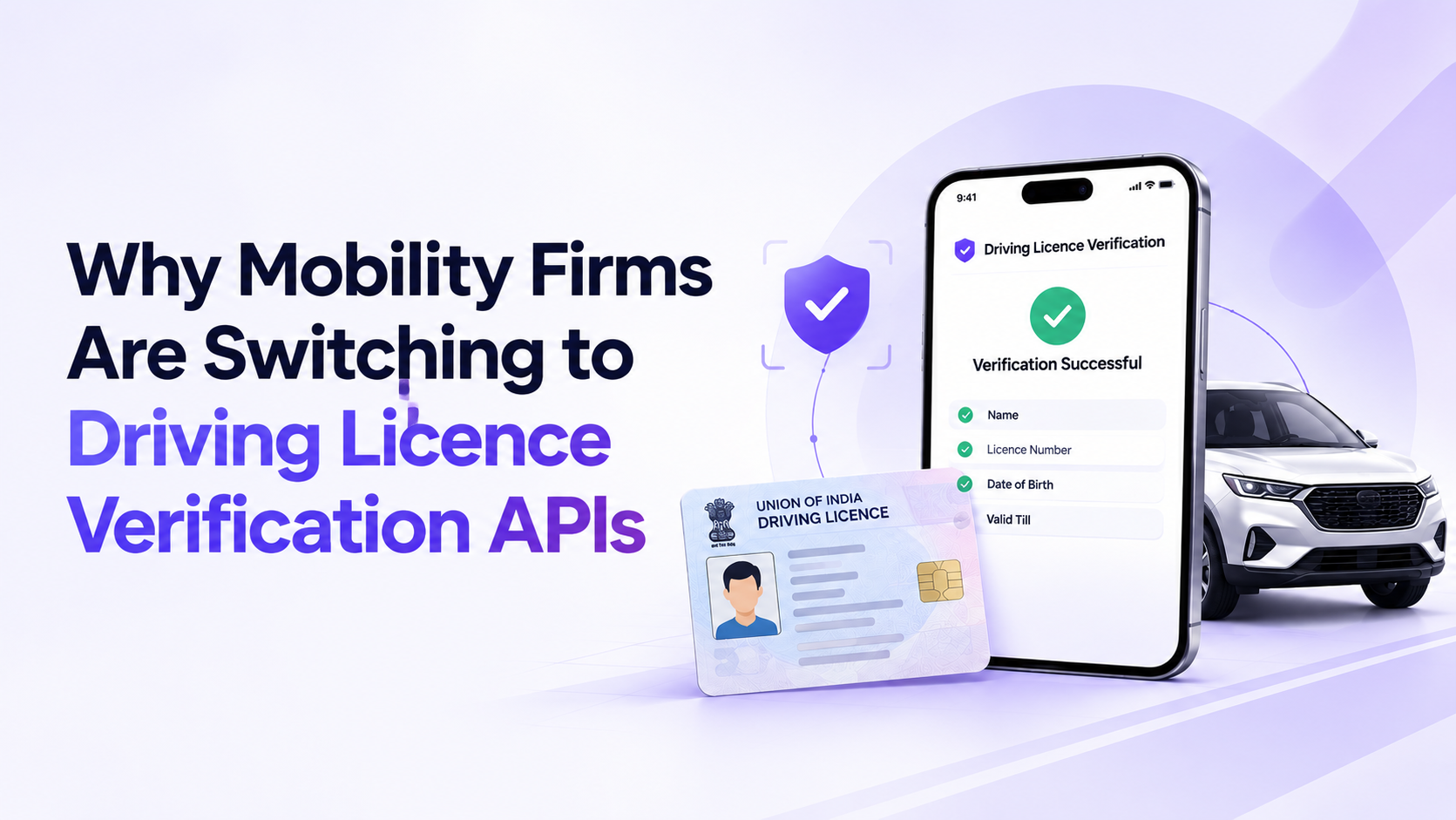
Ask a dozen mobility founders what finally made them fix driver onboarding, and you won't hear "compliance" very often. You'll hear about a claim.
Here's the one I keep going back to. A founder I advise got a call from his insurance broker after one of his driver-partners hit a scooter at a junction. The rider walked away with a cast and the scooter didn't walk away at all. The broker's question was reasonable enough: could they prove the driver held a valid commercial licence on the day? The paperwork said no. What he'd uploaded at signup was a learner's licence, and he'd been taking fares for three weeks on it. A learner's permit doesn't allow solo driving, full stop, so the insurer said no too. The repair bills, the medical costs, all of it came out of the company.
That story does the rounds in this industry because almost everyone has a smaller version of it: the expired licence nobody noticed, the fake card that sailed through a signup desk. What changed recently isn't that these problems got worse. It's that fixing them got cheap and instant, which is why firms have been moving to Digital KYC for Mobility built on licence verification. Most of the industry now calls that shift Digital Verification for Mobility.
Why Now, and Not Five Years Ago
Because five years ago there was no fix. "Verification" meant holding a laminated card under a tube light and making a judgement call. Nobody could check a few hundred licences a day against anything.
Today, companies can verify a driver's licence while the person is still signing up, instead of waiting for someone to check a physical copy later. With an authorised Digital Verification API, the driver enters their licence number and date of birth and gives consent for the check. The system then returns the key details, such as the registered name, licence status, expiry date, and the type of vehicle the driver is allowed to operate.
Look closely at that last field. It's where companies keep getting bitten. Learner's permit instead of a full licence. Expired in April. Suspended over an old challan. Two-wheeler endorsement on someone driving a commercial cab. On paper, all four look like a valid licence. Against the RTO database, none of them do. When you're hiring six hundred partners a week, that difference isn't a detail. It's the entire reason Digital Verification for Mobility exists at signup.
The document side matters too. With DigiLocker, the applicant pulls the licence straight from the issuer, digitally signed, with no one retyping fifteen characters by hand. Call that Digital Document Verification at the point where forgery stops being possible: there's no paper in the building, and nothing physical to fake, which is also why Digital Verification for Mobility stopped being optional for anyone onboarding at scale.
What the Switch Looked Like on the Ground
Back to the same founder. He was opening three tier-2 cities, hiring about six hundred driver-partners a week. His old setup, and "setup" is generous, ran through folding tables in partner parking lots: collect photocopies, courier them to head office, and verify "when someone got time." In a hiring wave, nobody got time. Drivers were live and carrying passengers before a single person in the company had read their paperwork.
The check now lives inside a Driver Onboarding API. Automated Driver Verification triggers the moment an application is submitted, and Digital Driver Onboarding does the one thing the paper queue never could: application six hundred of the week gets exactly the same scrutiny as application six.
The first month was underwhelming on purpose. A handful of licences were expired, a reminder and a temporary hold sorted that. Two were learner's permits masquerading as full licences. A bunch of names didn't match the forms, nearly all of it fat-fingered data entry rather than fraud. One licence was suspended. None of those people went live, and none of the genuine applicants sat waiting for days.
He'd braced for the fraud numbers. What actually moved the needle was speed. Same-day approval means the driver earns that week on your platform. A three-day queue means he's already earning on someone else's. That quiet churn is a big part of how Digital Verification for Mobility pays for itself even on the days nothing goes wrong.
Before You Sign With Anyone
The unsexy questions are the ones that save you. Where does the data actually come from? How is consent recorded, and how long do the logs stick around? What is a signup desk in a tier-2 town supposed to do at 9 a.m. on a hiring morning when the provider's service is down? For anyone buying Digital Verification for Mobility, that's not fine print, it's the whole deal. The data-handling side is covered in our guides on consent management for eKYC and API security for financial services; the paper versus digital piece explains why nobody goes back; and the Aadhaar to PAN API article shows how identity checks sit next to document ones.
The firms making this switch weren't burned by some spectacular fraud ring. They got a phone call like my founder friend did, did the maths, and found that one denied claim costs more than years of API fees, while insurers increasingly want the verification trail before they'll pay out. After that conversation, the photocopy in the drawer isn't a record. It's a question you'll be asked in an audit, and you won't like your own answer.