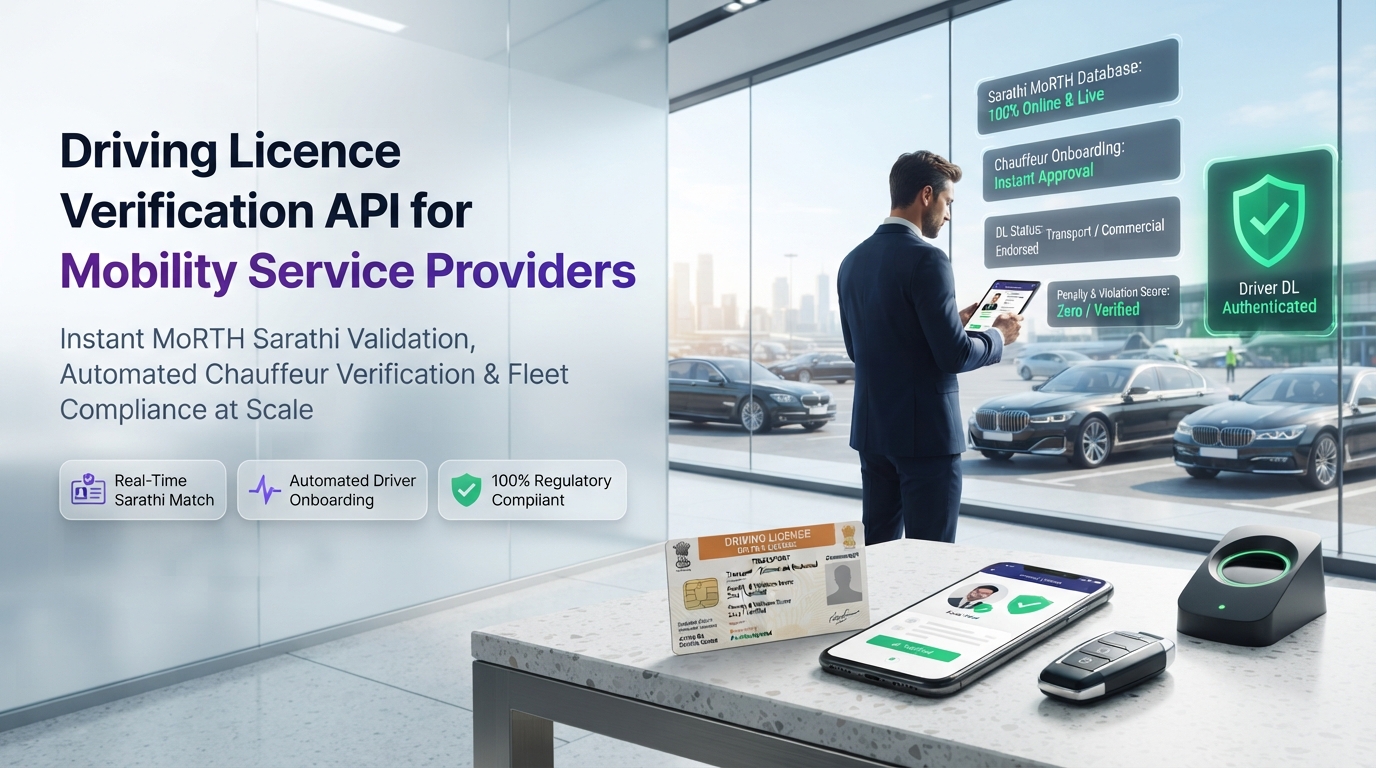
A supply manager at a Pune ride-hailing platform once showed me two phones lying on his desk. Both belonged to the same driver. One had his app open. The other had a competitor's app open, same driver profile, photo and all. "He signed up with us on Monday," the manager said. "He signed up with them on Monday too. They activated him Tuesday evening. We were still checking his licence on Thursday. Guess whose cab he drives." That's the mobility business in one desk. Drivers multi-home. They apply to every platform in the city in a single afternoon, and whoever switches them on first gets the supply. The others get a dormant profile and a recruitment bill. His platform was spending real money per recruited driver, referral bonuses, street campaigns, the lot. Then a manual licence check took two to four days, and in that window roughly four out of ten recruits started driving for someone faster. Paid for the driver. Lost the driver. Every week. Activation Speed Is a Supply Decision Here's the uncomfortable part. Everyone in mobility knows supply wins markets. Fewer people connect that fight to the verification queue, because verification lives with the compliance team, and the compliance team isn't in the supply war room. But a driver is not a customer who'll wait for your email. He has an EMI on the vehicle and a family behind it. Idle days are unpaid days. Whichever app lets him earn tonight is the app he opens tomorrow. A Driving Licence Verification API collapses that queue into seconds. Licence details go in during signup, the check runs against source records while the driver is still holding his phone, and a clean result means he can be earning the same evening. We've written about the goods side of this in our logistics onboarding post and the fleet side in our fleet management post. Mobility is the sharpest version of the same problem, because in mobility the driver has somewhere else to go. And there's a second blade to this knife. Mobility platforms carry passengers. A fake or suspended licence isn't a paperwork problem here, it's a person in the back seat of a car being driven by someone who shouldn't be driving it. Speed without checking is how platforms end up in headlines. Checking without speed is how they end up without drivers. A Driver Verification API is the only way I know to refuse that trade-off. What the Pune Platform Changed Three things, over one quarter. Their numbers, rounded, one company.
- Verification Moved Into Signup First, they wired a Driving Licence Verification API for mobility service providers into the signup flow itself. Blocking, immediate. Time-to-activation for clean profiles fell from days to under an hour. The share of recruited drivers who actually went online in week one climbed by about a third, which was most of what they'd been leaking to faster rivals. Nobody raised bonuses. Nobody bought more ads. The queue died and the supply showed up.
- The Same Check Caught More Problems Second, the same check quietly caught what the old process had been missing. A small percentage of applications, low single digits, came back with problems that a tired human eyeballing a photo would never spot: Wrong class of licence for a commercial ride Expired licence Two that looked outright invented The ops head told me: "The queue was slow and it wasn't even catching the right people. We had the worst of both."
- Verification Became an Ongoing Process Third, and this is the part most mobility companies skip, they started re-running the check on active drivers every quarter. A licence that was valid at onboarding can be suspended by the following summer, and the driver will not be the one to tell you. Their first sweep flagged a handful of active drivers whose status had changed. Handled quietly, before an incident, not after one. That's Driving Licence verification for mobility companies done as a habit rather than a hurdle. Their platform runs on a Driver verification API for mobility services the way their payments run on a gateway now. Infrastructure. Nobody discusses it in the war room anymore, which is the highest compliment infrastructure gets. IAMAI has argued for a while that India's digital mobility economy scales on trust rails like these, and from inside one Pune supply room, that's how it looked. What to Ask Before You Integrate Short list. Dull questions, decisive ones. Check Peak-Hour Latency Latency at evening peak, in writing, percentiles not averages, because signups spike when shifts end. The Best Driving Licence Verification API for mobility companies is the one that holds up at 8 pm on a Sunday. Check Full Field Coverage Full field coverage in the response. A Driving Licence API for driver onboarding has to return validity, class of vehicle, and expiry, not a bare yes. Class mismatches are your commercial-use risk hiding in plain sight. Check Batch Capacity Batch capacity for the quarterly sweep of your existing fleet. Any serious Driving Licence Verification API provider in India will quote this without blinking. Check the Audit Trail And the boring rails: driver consent captured in-flow, purpose logged, every query auditable. See our consent notes and our API security guide. A Driver verification API for mobility businesses touches personal data at scale. Regulators eventually visit everyone. Test With Your Own Data My test hasn't changed. Fifty known licences, including a couple you already know are bad, run them, compare, decide by evening. Conclusion The Pune manager keeps the two phones story for new hires now. His summary is better than mine: "We thought verification was a cost centre. It was the supply funnel the whole time." A Driving Licence API decides who drives tonight, and in mobility, who drives tonight decides who wins the city. Activate fast, check properly, re-check quietly, and the driver with two apps on his desk starts opening yours.