
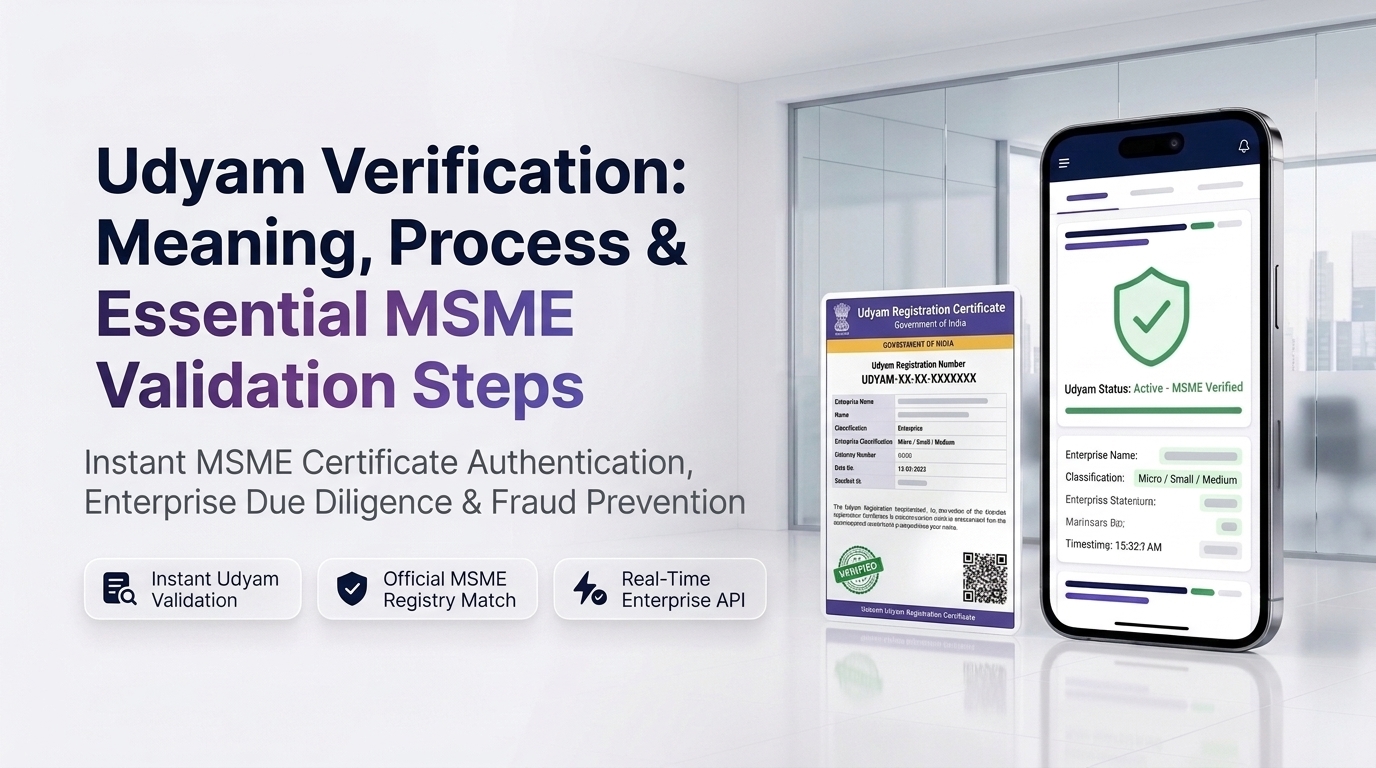
Udyam Verification: Meaning, Process & Essential MSME Validation Steps
Meera doesn't call me. She texts, usually one line. So when my phone actually rang last quarter and it was her, I knew a vendor had done something interesting.
Some background on why she cares. Her company clears MSME supplier invoices in 45 days instead of the usual 90, a real advantage if you're a small manufacturer waiting on working capital. A new packaging vendor had submitted an Udyam certificate to claim those terms. The certificate said "Small" enterprise. The vendor's own pitch deck, sitting in the same email chain, bragged about turnover big enough to push them two categories up. That's the kind of contradiction you can only miss if you never put the two documents side by side, which, in fairness, most procurement teams never do.
Her team ran a proper udyam verification against the official records. And here's the part that made her pick up the phone instead of texting. The registration number was completely genuine. It just belonged to somebody else, a two-person trading firm three states away. The vendor had taken a real number, typed their own company name onto a template, and hit print. When confronted, their accounts fellow said, word for word, "Sir, the consultant handled all that." They'd been enjoying MSME terms at two other buyers for over a year. Nobody had checked. Why would they? It was a very nice-looking PDF.
What Udyam verification actually means
If that story made you slightly nervous about your own vendor files, good, stay nervous for two more minutes.
Udyam registration is the single official identity for micro, small, and medium enterprises in India. Each registered business gets a permanent number, format UDYAM-XX-00-0000000, the XX being the state code, plus a certificate stating whether it's micro, small, or medium based on investment and turnover. The certificate is a document. Documents can be edited by anyone who owns a laptop. The record behind it can't.
Udyam registration verification just means checking the number against the official Udyam records instead of trusting the printout. The record gives you the enterprise name, current status, classification, registered activity, and registration date. Put those next to what the vendor claims. In Meera's case the very first field, the name, ended the conversation. That's udyam certificate verification in practice, and I'd add one warning from experience: classification moves. A firm that registered as micro three years ago may genuinely be small today, because the classification updates with its filings. I once watched a buyer nearly blacklist an honest supplier over exactly this. Old certificate, current record, legitimate growth in between. Mismatch means ask, not accuse.
The udyam verification process, step by step
The udyam verification process inside a real onboarding flow, as it runs on Meera's screen now: vendor shares the Udyam number and consents to the check, the system queries the official records, and a human compares three things. Name on the record versus name on the invoice. Status active or not. Classification versus the benefit being claimed. Total time, under two minutes. Their fraudulent vendor had survived two other companies' onboarding because neither one spent those two minutes.
The same MSME verification habit shows up wherever MSME status moves money. Banks run it before priority-sector lending. Big buyers run it before granting the delayed-payment protections small suppliers are entitled to, protections which are worthless if extended to a firm that isn't actually an MSME. Marketplaces run it on seller claims. I used to think this was a procurement-only problem. A lending friend cured me of that with one story about a "micro" borrower whose factory had two hundred workers.
How to verify udyam registration
Teams ask me how to verify udyam registration when the vendor count is fifty and climbing, because the manual route that works for one vendor dies at scale. That's the job of MSME registration verification through an API: every number checked at onboarding, results filed with a timestamp, an udyam registration check that happens by default instead of by memory. Mismatches route to a person as a query. The PAN verification piece covers the sister check most teams run in the same flow, and the consent management notes plus the API security guide cover handling the data properly once it's moving.
How to verify udyam certificate online
For the one-off case, someone asking how to verify udyam certificate online before signing a single contract: take the number printed on the certificate, run it through the official Udyam portal's verification facility, and match the name, status, and classification against the paper in your hand. Genuine certificates carry a QR code that resolves to the record, so scan it, don't admire it. If the number returns nothing, or returns a stranger, that's your answer. FISME publishes decent guidance for MSMEs on keeping registrations current, which is worth forwarding to honest suppliers whose records have simply drifted.
Conclusion
Meera's packaging vendor wasn't a criminal mastermind. They were a company with a printer and an accurate belief that nobody checks. An udyam verification takes two minutes and breaks that belief: check the number against the record, match name, status, and classification, send mismatches to a human. Genuine MSMEs are already in the records and lose nothing. The only vendors with a reason to fear a routine udyam registration check are the ones betting their whole act on you taking the PDF at its word. Meera texts me these days. The vendors behave better.